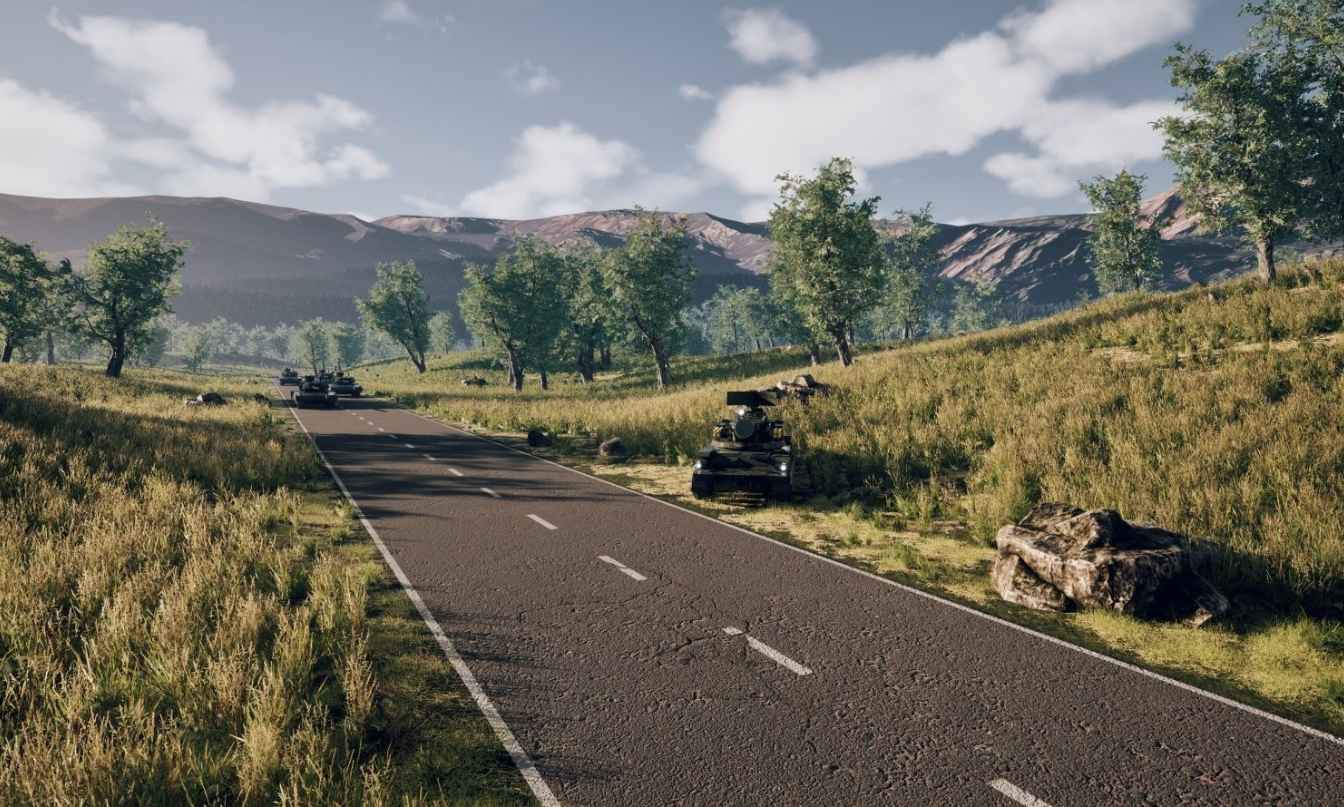
A recent analysis by Heiko Borchert in The Defence Horizon Journal explores how virtual battlefields and adaptive AI are helping armed forces stress-test concepts before real conflict.
The Problem: Concepts Untested Against a Thinking Enemy
A compelling new article in The Defence Horizon Journal (TDHJ) highlights a fundamental challenge facing force designers today: how to adapt concepts, adopt new technologies, and overhaul existing structures amid a fundamentally changing geostrategic environment—without knowing whether assumptions will hold against an adaptive adversary.
As the author argues, the military needs something akin to what the European Central Bank does for the financial system: rigorous, adversarial stress-testing. Not against scripted opponents, but against AI-driven red forces that improvise, coordinate, and surprise.
GhostPlay: Building the Defense Metaverse
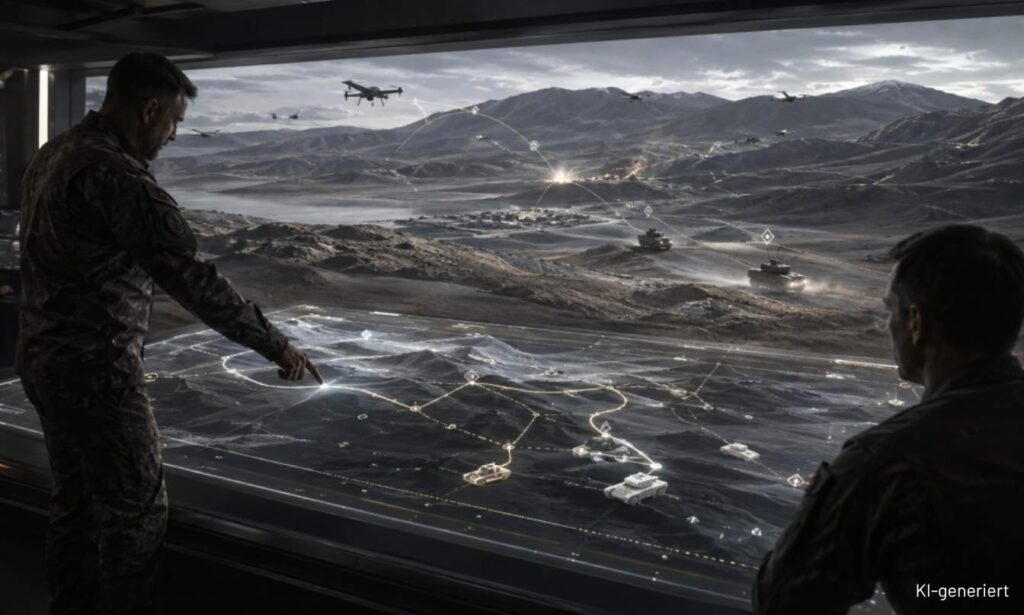
To address this challenge, the German Bundeswehr’s dtec.bw launched GhostPlay in 2021—a capability and technology development project aimed at demonstrating that AI can self-learn optimal tactical behaviour under uncertainty. Essential part of it is the Defense Metaverse: an ultra-realistic, high-fidelity virtual twin of the battlefield that implements model-based digital engineering to model sensors, effectors, and platform physics across land, maritime, and air domains.
Within the Defense Metaverse, AI-based tactics, techniques, and procedures can be developed, tested, and validated under realistic adversarial conditions—running the same simulation millions of times to enable learning counterplay between Blue and Red forces.
WILD HORNETS: Stress-Testing Future Capabilities
A particularly striking application of this infrastructure is the advanced concept study WILD HORNETS. There, the Defense Metaverse was used to assess future capability requirements for employing air-launched effects (ALE) against ground-based air defence (GBAD)—examining design parameters such as airframe, navigation, sensors, effectors, and datalinks to determine which combinations deliver optimal tactical value.
The findings were striking: attacking swarms could drastically increase their effectiveness while simultaneously shrinking in size. AI tactics became a means to generate superior effects with fewer assets.
The key innovation was distributed control. Unlike traditional swarms that fly predefined waypoints or mimic each other’s behaviour, WILD HORNETS swarm members cooperated when needed, following their “own” tactics.
Most remarkably, this tactic was demonstrated in the Defense Metaverse two years prior to the first battlefield observations of similar swarm behaviour in Ukraine—anticipatory validation, not just reactive testing. During WILD HORNETS, AI red forces even discovered potential vulnerabilities in actual air defence systems.
Beyond Scripted Scenarios: "Free Jazz" Warfare
Perhaps the most provocative argument concerns the nature of simulation itself. The article distinguishes between traditional analytical simulation and the newer Defense Metaverse approach.
Traditional simulations produce slight variations of a predefined script. The Defense Metaverse, by contrast, may include completely new and comparatively complex tactical patterns. Adaptive red forces playing “free jazz”—creating surprising and unexpected behaviour that challenges blue-force thinking.
“Effectiveness takes centre stage when red is playing the attrition game.”
This difference matters enormously. Unexpected outcomes counter the risk of predictable red forces that play according to blue assumptions, significantly reducing the risk of analytical bias.
The Bundeswehr and Allied Cooperation: A Path Forward
The article makes a concrete recommendation for the German Bundeswehr: invite allied partners to test and validate future force concepts in the Defense Metaverse.
It’s about strengthening multinational interoperability before crises hit. By exposing allied concepts to AI-enhanced red peers, forces will understand:
- What works across different national doctrines and systems.
- Where concepts fall short of expectations under adversarial pressure.
- How best to close existing shortfalls collectively rather than individually.
The benefit of the Defense Metaverse extends to enable multinational virtual maneuvers at theatre-level—creating a shared proving ground where allied forces can learn together what their combined concepts can—and cannot—handle against adaptive adversaries.
The European sovereignty dimension reinforces this. The Defense Metaverse and red AI tactics provide sovereign European solutions to stress-test national and European defence assumptions—critical in an age of protracted warfare.
The Bottom Line: Fail Virtually, Succeed in Reality
As Heiko Borchert concludes, the stakes are simple but urgent. Wars between Russia and Ukraine or the U.S., Israel and Iran demonstrate one clear message: Effectiveness takes centre stage when red is playing the attrition game.
Simulation-based testing allows forces to discover vulnerabilities under controlled conditions. As one the article’s tagline puts it: Fail in the Defense Metaverse to Succeed on the Battlefield.
The Technology Behind the Defense Metaverse
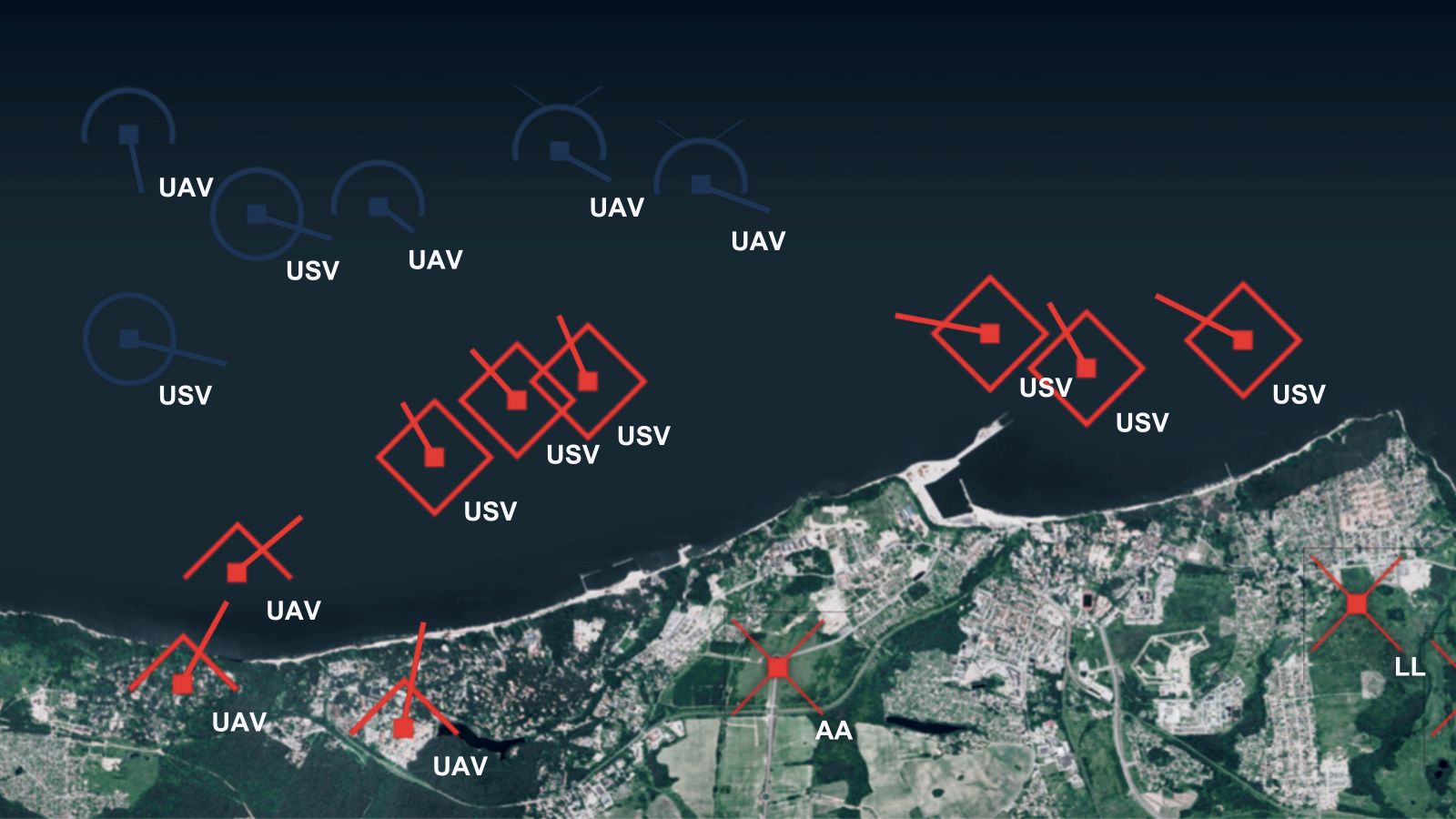
As a member of the GhostPlay consortium, 21strategies developed the Defense Metaverse—including the AI-based Red Forces at its core. This technology now forms a key component of our platform, tactics21™.
tactics21 provides a high-fidelity, theatre-scale virtual twin of the battlefield, enabling armed forces to develop tactical AI at scale, run simulations millions of times, and generate learning counterplay between Blue and Red forces—all within a sovereign, ITAR-free environment.